
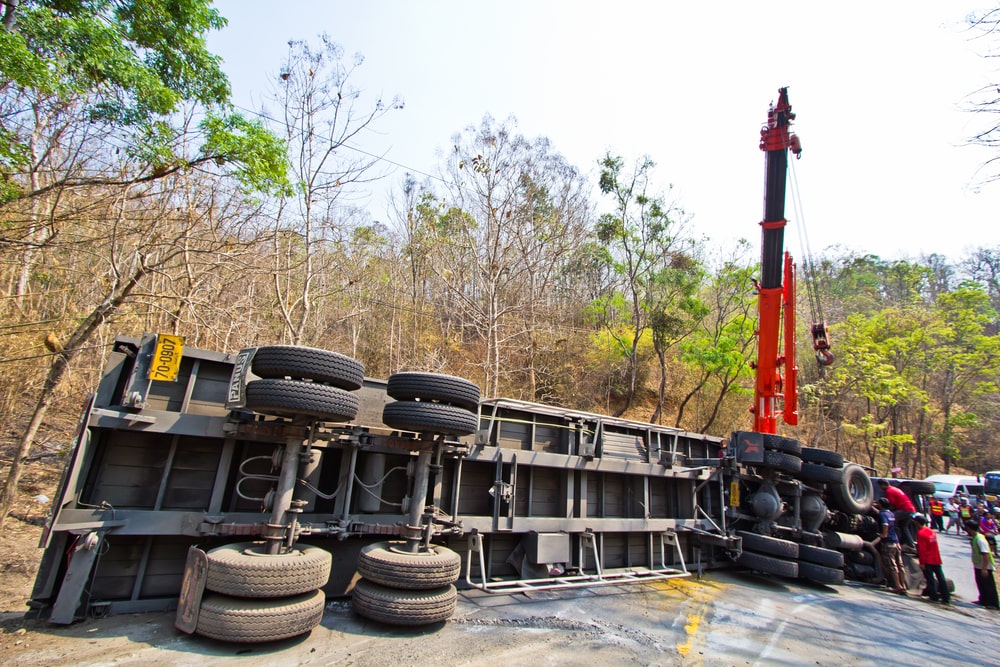
When people think about the causes of commercial truck accidents, speeding, fatigue, distracted driving, and mechanical failures often come to mind first. One important risk is much less visible: what is happening inside or on the trailer.
Cargo can dramatically affect the way a commercial vehicle handles. When freight is overloaded, poorly distributed, inadequately secured, or allowed to shift during transportation, a truck that initially appears stable can become difficult or even impossible to control.
Improper cargo loading can contribute to rollovers, jackknife accidents, lost loads, braking problems, and collisions involving vehicles that never directly contact the truck itself.
Understanding these risks helps explain why loading and securement are important parts of commercial vehicle safety. If you have been injured in a truck accident involving improperly loaded or unsecured cargo, a Monument, CO truck accident lawyer can help you understand potential liability and explore your options for pursuing compensation.
Weight Distribution Changes How a Truck Handles
Loading a commercial truck involves more than making sure everything physically fits inside the trailer.
Weight must be appropriately distributed.
If too much weight is concentrated in one area, the truck’s handling characteristics can change. Improper distribution can affect steering, braking, stability, and the amount of weight placed on individual axles.
A poorly balanced trailer may behave unpredictably during turns or emergency maneuvers.
This becomes especially dangerous when a driver must respond suddenly to congestion, another vehicle, an obstacle, or changing road conditions.
Shifting Cargo Can Destabilize a Vehicle
Even cargo that begins a trip in the correct position can create danger if it is not adequately restrained.
Every acceleration, stop, turn, and lane change produces forces on the freight inside or on a trailer. Without appropriate securement, cargo can slide, roll, tip, or otherwise shift.
A substantial shift can alter the vehicle’s center of gravity almost instantly.
Imagine a trailer carrying heavy cargo that moves sharply toward one side during a turn. The driver may suddenly be attempting to control a truck whose weight distribution is completely different from what it was moments earlier.
That instability can contribute to a rollover or loss of control.
High Centers of Gravity Increase Rollover Risk
Some commercial loads naturally create a higher center of gravity.
Tall or stacked cargo can make a truck more susceptible to rollover, particularly during curves, highway ramps, abrupt steering maneuvers, or sudden lane changes.
The faster a truck enters a turn, the more difficult these forces may become to manage.
Proper loading practices are therefore especially important when transporting freight that changes the vehicle’s center of gravity.
Drivers must also understand how their particular load affects handling rather than assuming the truck will respond the same way on every trip.
Falling Cargo Can Endanger Everyone Nearby
Improper securement can create hazards beyond the truck itself.
Cargo that falls onto a roadway can strike nearby vehicles directly. Even when there is no direct impact, motorists may swerve or brake suddenly to avoid debris.
Those evasive maneuvers can trigger secondary collisions involving several vehicles.
Large objects are not the only concern. Smaller items scattered across a highway can cause tire damage, motorcycle crashes, or sudden traffic disruptions.
Federal cargo-securement standards are specifically intended to prevent freight from shifting on or within commercial vehicles or falling from them during transportation.
Overloading Can Affect Braking and Vehicle Control
Commercial vehicles are designed to operate within established weight limitations.
Excessive weight can place additional demands on brakes, tires, suspension components, and other vehicle systems. It may also increase the distance necessary to slow or stop the truck.
A heavily loaded truck already requires substantial stopping distance compared with a passenger vehicle. Additional or improperly distributed weight can make emergency stopping even more difficult.
Overloading may also affect vehicle stability and place unnecessary stress on components that are essential to safe operation.
Different Cargo Requires Different Securement Methods
There is no universal way to secure every commercial load.
Logs, heavy machinery, vehicles, metal coils, concrete pipe, containers, and other specialized cargo present different challenges. Federal regulations therefore contain both general securement standards and additional requirements for certain commodities.
Securement equipment can include tiedowns, chains, webbing, blocking, bracing, wedges, cradles, or other systems appropriate for the cargo being transported.
The equipment itself also needs to be in suitable condition.
A securement system cannot provide adequate protection if components are damaged, weakened, incorrectly positioned, or inappropriate for the load.
Responsibility May Extend Beyond the Truck Driver
Cargo-related accidents can involve several individuals or businesses.
Depending on the circumstances, loading may be performed by the driver, trucking company employees, a shipper, warehouse personnel, contractors, or another party.
That can make an investigation considerably more complicated.
Questions may include:
- Who loaded the cargo?
- Who secured it?
- Was the driver able or required to inspect the load?
- Was the cargo properly distributed?
- Were appropriate securement devices used?
- Was the load checked during transportation when required?
- Was the vehicle carrying more weight than permitted?
Answers to these questions can help explain whether the problem developed during loading, inspection, transportation, or some combination of events.
Documentation Can Help Explain What Went Wrong
When cargo loading is suspected of contributing to an accident, investigators may examine considerably more than the crash scene itself.
Relevant evidence can include shipping documents, weight information, photographs, loading records, inspection documentation, driver records, surveillance footage, and information about the equipment used to secure the load.
The physical condition of the cargo after the crash may also provide important clues.
For example, broken securement equipment may need to be examined to determine whether it failed because of the forces of the collision or whether a preexisting problem allowed the cargo to move before the crash occurred.
Proper Loading Is a Critical Part of Truck Safety
Cargo securement can be easy for other motorists to overlook because much of it occurs before a truck enters the highway.
Yet those loading decisions can affect the vehicle throughout the entire trip.
Properly distributing weight, selecting appropriate securement equipment, inspecting the load, and responding when cargo shifts are all important components of safe commercial transportation.
A mistake made at a loading dock can ultimately become a hazard hundreds of miles away.
The Bottom Line
Commercial truck safety begins long before the driver encounters traffic.
The way cargo is loaded and secured can influence steering, braking, stability, stopping distance, and rollover risk. When freight shifts or falls from a vehicle, the danger can extend to motorists throughout the surrounding roadway.
That is why cargo securement is more than a logistical concern. It is a fundamental safety responsibility.
When a commercial truck accident appears to involve a shifted, overloaded, or lost load, understanding how the cargo was prepared for transportation can be just as important as understanding what the driver did in the seconds immediately before the crash. If you have been injured in a truck accident involving a shifted, overloaded, or unsecured load, contact Ganderton Law Personal Injury Law Firm to discuss your circumstances and understand your legal options.