


Rider-focused injury representation in Colorado Springs grounded in two decades of plaintiff-side trial work.
If a motorcycle crash has left you injured in Colorado Springs, having an experienced attorney on your side is crucial. At Ganderton Law Personal Injury Law Firm, our Colorado Springs, CO motorcycle accident lawyer builds these cases around accident reconstruction, thorough medical documentation, and a damages presentation prepared to withstand insurance bias. We represent plaintiffs only. Contact us today for a free case review.
Motorcycle Accident Lawyer Colorado Springs, CO
 A motorcycle accident attorney handles every stage of a rider’s injury claim, from investigating the crash and identifying liable parties to preserving electronic data and negotiating with insurance carriers. Among the most severe outcomes we see in motorcycle crashes are traumatic brain injuries, spinal cord trauma, and complex orthopedic injuries that demand long-term care. Establishing the connection between the crash and the rider’s diagnosis requires early documentation and an honest forecast of what future treatment will demand.
Motorcycle cases also carry an underlying problem that car cases rarely do. Adjusters and jurors often arrive with preconceived ideas about riders, and those assumptions can shape an entire claim if no one pushes back. We build every case around physical evidence, expert reconstruction when warranted, and a damages picture that reflects the rider’s actual losses rather than the carrier’s preferred number.
Types of Motorcycle Accident Cases We Handle in Colorado Springs
 Every motorcycle crash presents a different combination of facts, evidence, and legal challenges, each requiring a careful, fact-driven approach. The matters outlined below represent the cases we routinely handle for riders across Colorado Springs and Southern Colorado.
- Driver negligence crashes. Most motorcycle collisions stem from a driver who failed to yield, ran a stop sign, or simply did not see the rider. We use witness statements, traffic camera footage, and reconstruction to establish what the driver did and what they should have done.
- Impaired driving collisions. When a drunk or drug-impaired driver causes a motorcycle crash, DUI consequences often extend beyond the criminal case into the civil claim. Punitive damages may become available alongside compensatory damages, and the criminal record can play a role in the civil result.
- Left-turn accidents. A driver turning left across an oncoming rider’s path is one of the most common and most devastating motorcycle crash patterns. These cases turn on the timing of the turn, the rider’s lane position, and any evidence about visibility at the intersection.
- Lane-change and merge accidents. Drivers regularly fail to check blind spots before changing lanes, and a motorcycle is usually the vehicle that pays the price. Reconstruction often hinges on vehicle position and the moments leading up to the lateral movement.
- Intersection crashes. Riders face elevated risk at intersections, where multiple traffic patterns converge. We pull signal timing data, witness accounts, and any available video to determine right-of-way and fault.
- Rear-end collisions. A rider stopped at a light or slowing in traffic can be struck from behind by an inattentive driver. These crashes frequently produce serious neck, back, and head injuries even at lower impact speeds.
- Road condition cases. Potholes, debris, unmarked construction, and inadequate signage can throw a rider off the bike. When a municipality, contractor, or property owner failed to maintain a roadway or warn of a hazard, liability may extend beyond the typical driver-versus-driver framework.
- Vehicle malfunction claims. Defective brakes, tires, fuel systems, or aftermarket parts can cause or worsen a crash. These cases require quick preservation of the motorcycle and parts, along with input from product liability professionals.
- Hit-and-run accidents. Drivers who flee the scene create immediate challenges for the rider’s claim. We pursue uninsured motorist benefits, coordinate with the police investigation, and use surveillance footage and witness statements to identify the driver when possible.
- Fatal motorcycle crashes. When a rider does not survive, the case shifts into wrongful death territory. We act quickly to preserve evidence, meet Colorado’s filing deadlines, and pursue the full recovery to which the family is entitled.
Why Choose Ganderton Law Personal Injury Law Firm for Motorcycle Accident Representation in Colorado Springs, CO?
 A Founder Committed to Southern Colorado Riders
 A Founder Committed to Southern Colorado Riders
Riders bring their cases to Dave Ganderton because his practice has been built on injury claims that hold up under pressure from insurers and defense attorneys. Dave earned his undergraduate degree at Florida State University and his J.D. from Stetson University College of Law. He maintains active bar admissions in Colorado, Wyoming, and Florida. Beyond the firm, Dave serves as an ambassador for the Tri-Lakes Chamber of Commerce and contributes to organizations including The Exodus Road, Safe Families for Children, and Denver Kids. His work has been recognized with a Top 100 Trial Lawyer designation from the National Trial Lawyers Association, along with Best Personal Injury Attorney, Best Lawyer, and Best Law Firm honors in the Colorado Springs Gazette’s Best of the Springs reader awards.
Proven Results and Contingency Representation
Over the years, we have represented riders and other injured clients in Southern Colorado, and our firm has recovered millions of dollars through settlements and verdicts, recognizing that no prior outcome predicts what any new case will deliver. Those figures reflect careful case preparation rather than high-volume processing. Hiring our firm as your personal injury lawyer in Colorado Springs, CO, costs nothing up front. Representation is contingent. No fee is owed unless we recover for you, and your first consultation is free.
Understanding Motorcycle Accident Cases
Damages, Liability, and Compensation for Motorcycle Accident Cases
 Damages, Liability, and Compensation for Motorcycle Accident Cases
Colorado allows injured riders to pursue damages from the at-fault driver, the driver’s carrier, and other parties at fault. Recoverable damages typically fall into the categories below.
- Past and future medical expenses, including surgery, rehabilitation, and long-term care
- Lost wages and reduced earning capacity
- Motorcycle repair or replacement
- Pain, suffering, and emotional trauma
- Permanent scarring, disfigurement, or disability
- Loss of consortium for spouses
- Punitive damages in cases involving especially reckless or willful conduct, including DUI crashes
Colorado applies a modified comparative negligence rule. The rule reduces a rider’s recovery by the percentage of fault and bars compensation entirely if the rider is found 50% or more at fault. A 20% allocation against the rider on a $200,000 case drops the recovery to $160,000. Policy limits can also shape what recovery is realistically available in a given case.
Important Aspects in Your Motorcycle Accident Case
Motorcycle cases vary widely, but certain elements consistently shape the outcome. Documenting them early often determines the outcome.
- The crash report. Although not the final word on fault, it is the document that carriers initially rely on when assessing the claim.
- Medical documentation. Same-day treatment carries weight. Gaps in care give carriers room to argue that the injuries are unrelated or exaggerated.
- Helmet and gear evidence. Colorado does not require adult riders to wear helmets, but choices about protective gear may arise during negotiations and need to be handled appropriately.
- The motorcycle itself. The damaged bike is evidence. It should be preserved until reconstruction and inspection are complete.
- The insurance company’s approach. Adjusters often reach out early for recorded statements that can be used to limit recovery later.
Riders frequently underestimate how quickly defense teams begin shaping the narrative. Engaging our attorneys early in the process allows the claim to develop with the precision and discipline the matter requires. Many motorcycle crashes in Colorado involve patterns that show up repeatedly in our work.
Motorcycle Accident Case Timeline
Every case moves at its own pace, but most follow a recognizable arc from initial investigation through resolution.
- Medical treatment and stabilization. Accurately valuing the case is not possible until the rider’s condition has stabilized.
- Investigation and evidence preservation. Crash reports, scene photographs, electronic data from the vehicles, and witness interviews.
- Demand and negotiation. Once treatment plateaus, we submit a demand package that includes medical records, bills, wage-loss documentation, and our valuation of the claim.
- Filing suit if necessary. Many cases resolve before this stage. Those that do not move forward through the Colorado district court system.
- Discovery, depositions, and resolution. Mediation resolves many cases. Those that do not proceed to trial.
A case with clear liability and reasonable insurance coverage may be resolved in six to twelve months. Matters involving contested fault, severe injuries, or low policy limits typically require additional time.
What to Bring to Your Motorcycle Accident Consultation
Arriving with the right documentation helps the claim move forward more efficiently. We use the time to review the facts, examine the evidence, and provide a clear assessment of where the case stands.
- The crash report, if available
- Photographs of the motorcycle, the scene, and any visible injuries
- Insurance information for all parties involved
- Medical records, discharge instructions, and itemized bills to date
- Pay stubs or income documentation if work has been missed
- Contact information for any witnesses
The consultation typically takes thirty to sixty minutes. By the end, you will have a clear understanding of your options and next steps.
Colorado Legal Resources for Motorcycle Accident Claims
 Riders researching the legal framework that applies to their case can start with the resources below. None substitutes for advice from an attorney familiar with the specific facts of your crash.
- C.R.S. § 13-80-102 sets a two-year statute of limitations for most negligence-based personal injury claims, including motorcycle injuries.
- C.R.S. § 13-21-111 establishes Colorado’s modified comparative negligence rule, which reduces a rider’s recovery by their share of fault and bars recovery once that share reaches 50%.
- C.R.S. § 13-21-102.5 sets statutory caps on non-economic damages in personal injury cases, adjusted periodically for inflation.
- C.R.S. § 13-21-102 governs the availability of exemplary damages in cases involving willful and wanton conduct.
- NHTSA motorcycle safety data compiles federal research and statistics on motorcycle crashes, injuries, and fatalities.
Reach Out to Ganderton Law Personal Injury Law Firm to Schedule a Consultation
If a motorcycle crash has left you injured and uncertain about what comes next, our firm is ready to help. Our Colorado Springs motorcycle accident attorneys offer free consultations and work on contingency, with no fees unless we recover for you. We respond promptly, listen carefully, and give honest answers from the first conversation forward. Contact us today to schedule a free, confidential review of your case.
Motorcycle Accident Statistics in Colorado Springs, CO
 Nationwide, motorcycles riders made up 15 percent of everyone killed on the roads in 2023, a share much higher than the number of motorcycles on the road would suggest. NHTSA reporting also found that in states without a universal helmet law, 51 percent of the riders who died were not wearing one, compared with just 10 percent in states that require them. Colorado is no easy place to ride. State transportation figures show 148 motorcyclists were killed here in 2025, roughly a fifth of all traffic deaths, and almost half of the riders killed during the past five years were not wearing helmets. For anyone on two wheels around Colorado Springs, CO, that risk is part of everyday riding.
Types of Evidence Used in Motorcycle Accident Cases
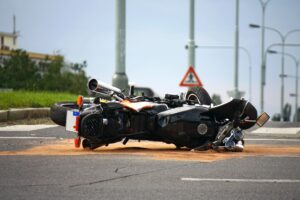 Motorcycle claims are won or lost on the evidence, and riders start at a disadvantage because so many people assume the person on the bike was at fault. Thorough evidence can make the difference between a denied claim and a successful one.
- The crash report. An officer’s write-up establishes the basic facts soon after the collision, including who was where, what was said, and whether a citation was issued. It is a starting point and provides an important foundation for the case.
- The scene itself. Pavement damage, skid marks, and debris help accident reconstruction specialists recreate the sequence of events leading to the collision.
- Electronic data. Many modern vehicles store speed, braking, and throttle information in an event data recorder. When preserved quickly, this data can contradict a driver’s version of events.
- Photographs and video. Images of the vehicles, the roadway, and traffic signals help, and footage from a nearby business camera or a doorbell can settle a dispute outright.
- Medical records. Same-day treatment at a trauma center documents that the injuries were caused by the crash rather than by something else.
- The bike and the gear. The condition of the motorcycle and gear, from a cracked helmet to torn clothing, tells part of the story about speed, angle, and force.
- Witnesses. A neutral bystander who saw the driver turn across the rider’s lane can carry more weight with an insurer than either party’s own account.
- Specialist analysis. Reconstructionists, treating physicians, and economists turn evidence into professional opinions a jury can follow, placing a financial value on future treatment needs and lost earning potential.
No single piece of evidence proves a claim on its own. The strongest cases emerge when the evidence consistently supports the same version of events, which is why gathering it quickly, before memories fade and a damaged vehicle is repaired, changes what a claim is worth.
Colorado Springs Motorcycle Accident Lawyer FAQs
How are legal fees handled for a motorcycle case?
 How are legal fees handled for a motorcycle case?
We take rider cases on contingency, so our payment comes from the settlement or verdict and you pay nothing upfront. If we recover nothing, you owe nothing. The first consultation is free, with no pressure to move forward if you choose not to, so injured riders can receive an honest evaluation of their case before deciding how to proceed.
Who is usually to blame when a car hits a rider?
The driver, far more often than not. Failing to yield on a left turn, drifting into a rider’s lane, and the familiar “I never saw the bike” account for most of these wrecks, and Colorado places the cost on whoever caused them. That makes Colorado’s fault rules central to the claim. When a drunk driver is involved, the fault picture and the potential damages both change. And if several vehicles were caught up in the crash, which insurer pays becomes a fight of its own that we work through for you.
What injuries do these crashes cause, and can I be paid for them?
Motorcycle wrecks tend to produce the worst injuries on the road. We handle claims involving spinal cord injuries, brain injuries, and the kind of catastrophic injuries that create lifelong physical, financial, and emotional challenges. Even a back injury that looks moderate at the scene can lead to surgery and years of pain. Colorado lets an injured rider recover for medical care, lost income, diminished earning power, and the pain and permanent limitation these injuries leave behind.
How long do I have to file in Colorado?
Generally three years, counted from the day of the wreck. A motorcycle crash is a motor vehicle collision under Colorado law, which sets that three-year deadline. If you fail to file within the deadline, a court can dismiss the claim regardless of how badly you were hurt. Evidence disappears long before the deadline, so early action almost always serves a rider better than waiting.
Can I recover if I share part of the blame?
Often, yes. Colorado uses a modified comparative fault system, meaning a rider who is less than half responsible can still collect, with the recovery reduced by their own percentage of fault. If your share of fault is fifty percent or more, you cannot recover damages. Insurance adjusters often attempt to use the reckless rider stereotype to inflate your share. We build the fault case on documentation instead of accepting unsupported conclusions.
Will not wearing a helmet sink my claim?
No, not on its own. A rider hurt by another driver’s mistake can still pursue full compensation. An insurer will attempt to shift a portion of the blame onto you under the comparative fault rule, arguing that a helmet would have reduced the risk of a head injury. We answer that with medical evidence of how the injuries actually occurred, rather than accepting the insurance company’s speculation.
Is the first offer from the insurer fair?
Rarely, so don’t rush to accept it. Early settlement offers often fail to reflect the full value of a motorcycle accident claim, and accepting an early check usually ends the claim for good. Motorcycle injuries pile up costs for months. Let the offer be weighed against the full extent of your losses before you sign.
Is a medical visit necessary if I can still walk?
Yes. Standing and talking after a crash is not proof you were not seriously injured, and shock can hide real damage for a day or more. A prompt exam protects your health and creates a clear link between the wreck and your injuries. Waiting can make it easier for the insurance company to dispute your claim, which is why delayed medical care may weaken your case.
Should I hire an attorney, or go it alone?
You are free to handle it yourself. Given the bias riders face and the tactics insurers use, though, handling a claim alone tends to settle for less than it should. A motorcycle accident attorney protects your interests throughout the claims process. If you are deciding whether legal representation is right for you, a handful of questions to ask during a free consultation will help you evaluate your options.
Local Information for Colorado Springs, CO Motorcycle Accident Cases
Most Dangerous Locations for Motorcycle Accidents in Colorado Springs
 Most Dangerous Locations for Motorcycle Accidents in Colorado Springs
Around Colorado Springs, the greatest risk for riders shows up where speed and turning traffic collide.
- Interstate 25 through the city. Fast lanes and sudden merges leave a rider little room when a driver changes lanes without checking a blind spot.
- Powers Boulevard. A high-speed corridor with heavy commercial traffic and frequent lane changes across several lanes.
- Academy Boulevard. Its long stretch of busy intersections makes it a hot spot for left-turn and red light collisions involving motorcycles.
- Highway 24 through Ute Pass. Popular with riders headed to Woodland Park. The curves stack up, the grade changes, and riding at night or in sudden mountain weather raises the risk of a crash.
What Are Important Local Resources for Colorado Springs Motorcycle Accident Cases?
When a rider is injured in a crash near Colorado Springs, a few city and county contacts can point you toward reporting the crash, getting treatment, and moving your claim ahead.
- Colorado Springs Police Department, 719-444-7000, to report a crash that happened within city limits.
- UCHealth Memorial Hospital Central, 719-365-5000, the region’s Level I trauma center on East Boulder Street.
- El Paso County Sheriff, 719-390-5555, for crashes in the unincorporated county outside the city.
- Colorado State Patrol, 303-239-4501, for highway and interstate wrecks, and to request a crash report.
We include these contacts for informational purposes only. We do not endorse any of the organizations listed above, and none is connected to Ganderton Law Personal Injury Law Firm.
About Ganderton Law Personal Injury Law Firm
David Ganderton founded Ganderton Law Personal Injury Law Firm and still runs it from the Colorado Springs office, standing with injured riders rather than the insurers on the other side. His results include $335,000 recovered for a client who suffered a traumatic brain injury when a motorcycle struck a pedestrian. Motorcycle claims are one part of our broader Colorado Springs personal injury practice, and our founder stays personally involved in each one from the first call through resolution.
Ganderton Law Personal Injury Law Firm Colorado Springs Motorcycle Accident Lawyers
5555 Tech Center Dr Ste 120, Colorado Springs, CO 80919
What Our Clients Say
⭐⭐⭐⭐⭐
“Ten stars. I cannot express how knowledgeable, caring, honest, and hard-working this group is. They walked us through the entire process, kept us in the loop, and made sure we understood every step. They even found different ways to reach me around my overnight work schedule. Local, family-owned, and trustworthy. I will always call and recommend Ganderton Law.”
Jessika C.
Read more reviews on our Google Business Profile.
Contact Ganderton Law Personal Injury Law Firm
 A motorcycle wreck can upend a rider’s life in seconds while giving the insurance company every incentive to undervalue what comes next. Facing that on your own puts you at a disadvantage from the start. Our fee depends on winning, so you pay nothing unless we recover for you. The first consultation free. Give us the facts, and we’ll provide an honest assessment of your claim and how we would pursue it. Count on a prompt response and attorneys who stay in touch. Contact us to get started.
