
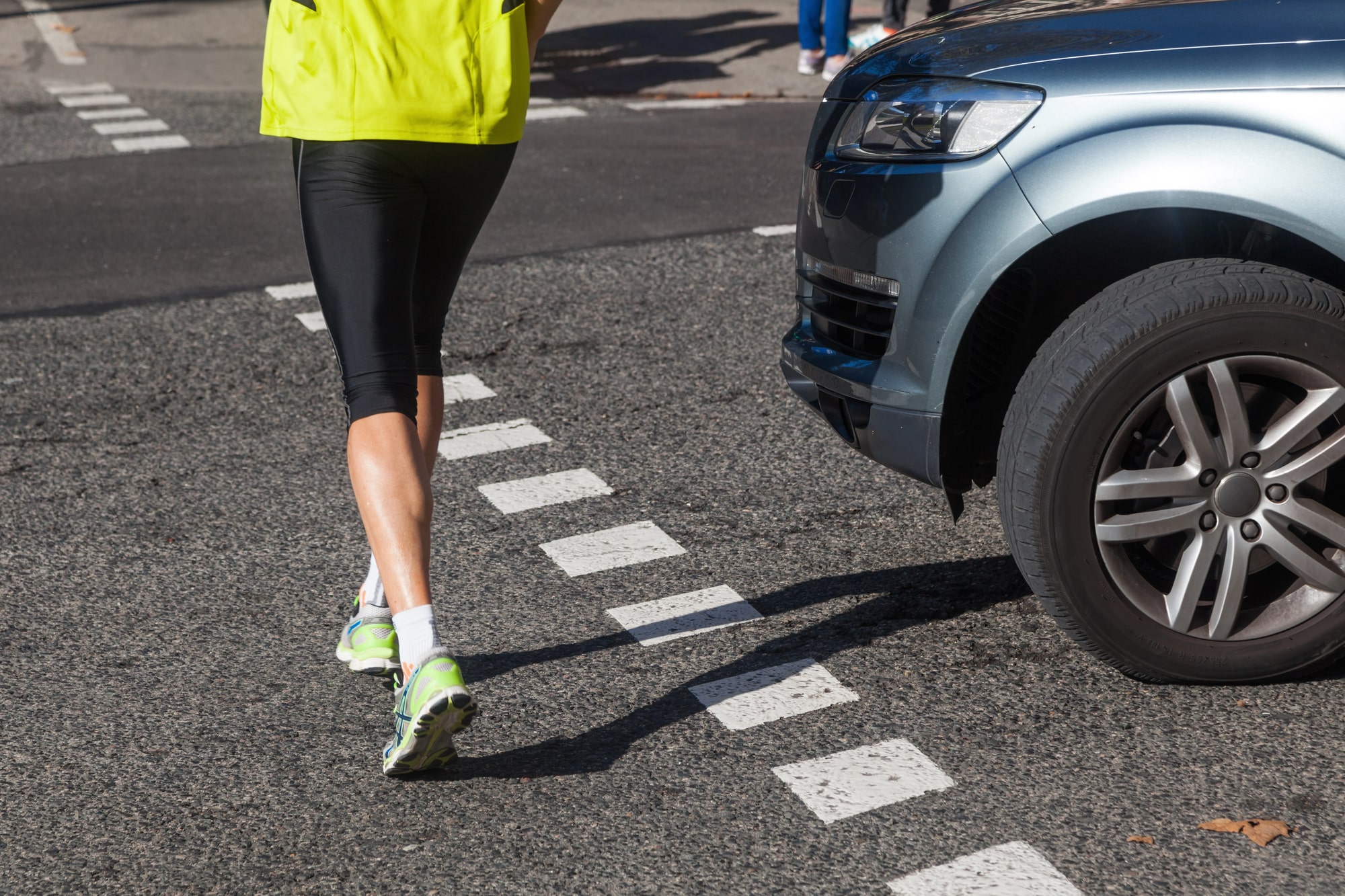
Parking lots usually involve low vehicle speeds, but that does not make them risk-free. Drivers, pedestrians, shopping carts, delivery vehicles, reversing cars, and limited sightlines may all occupy the same relatively small space.
Unlike ordinary roads, parking lots frequently require drivers and pedestrians to anticipate movement from almost every direction. If you have been injured in a parking lot accident, a personal injury lawyer can help you understand your rights and determine whether you may be entitled to compensation.
Vehicles Are Constantly Backing Up
Backing vehicles are a major concern in parking areas.
Drivers leaving spaces may have limited visibility because of neighboring vehicles, structural columns, landscaping, or other obstructions.
Pedestrians walking behind parked cars may also be difficult to see, particularly children and shorter individuals.
Backup cameras and sensors can assist drivers, but they do not eliminate the need to check surroundings carefully.
Pedestrians and Vehicles Share Space
Many parking lots have designated pedestrian routes, but people do not always use them.
Someone may walk diagonally toward a store entrance, cross between parked vehicles, push a shopping cart through a driving lane, or stop unexpectedly.
Drivers should anticipate pedestrian activity rather than assuming people will remain in designated areas.
Pedestrians should likewise recognize that a driver may not see them simply because they can see the vehicle.
Distracted Driving Still Matters at Low Speeds
Drivers sometimes relax their attention after leaving the roadway and entering a parking lot.
They may begin checking phones, searching for a parking space, speaking with passengers, or looking toward storefronts.
Those distractions occur at precisely the time the driver is entering an environment filled with unpredictable movement.
Low speed can reduce some risks, but it does not eliminate the possibility of serious injury.
Poor Sightlines Create Conflicts
Large vehicles can block the view of approaching traffic.
A driver pulling out from behind a van or sport utility vehicle may have difficulty seeing another car traveling down the aisle. The approaching driver may likewise be unable to see the vehicle emerging from the space.
Drivers can reduce this risk by moving slowly and cautiously when visibility is limited.
The Pavement Itself Can Be Hazardous
Parking lot accidents are not limited to vehicle collisions.
Potholes, cracks, broken pavement, wheel stops, drainage structures, accumulated debris, snow, ice, and uneven surfaces can create hazards for pedestrians.
Changes in elevation may be particularly difficult to recognize at night or in areas with inadequate lighting.
Shopping Carts and Other Moving Objects
Unsecured shopping carts can roll into vehicles or pedestrian areas, particularly on sloped surfaces or during windy weather.
Delivery equipment and other movable objects can create similar problems.
Businesses can reduce these risks by providing appropriate cart-return areas and monitoring parking areas for obstructions.
Lighting Is an Important Safety Feature
Parking areas are often used before sunrise or after dark.
Adequate lighting can help drivers identify pedestrians, signs, pavement markings, and other vehicles. It can also help pedestrians recognize uneven surfaces and moving traffic.
Burned-out fixtures or poorly illuminated sections may deserve prompt attention.
Intersections Still Exist Inside Parking Lots
Parking lots contain intersections even when they do not resemble conventional street crossings.
Driving aisles cross one another, vehicles enter from side lanes, and traffic circulates around buildings.
Signs, pavement markings, arrows, and other traffic controls can help organize these movements, but drivers still need to observe surrounding traffic.
Documenting a Parking Lot Accident
After an accident, photographs can be especially helpful because parking lots may contain few permanent reference points.
Pictures showing vehicle positions, parking spaces, signs, pavement markings, lighting fixtures, obstructions, or surface defects can provide useful context.
The attorneys at Isaacson, Schiowitz & Korson, LLP also note that surveillance cameras are common at many commercial properties, although whether useful footage exists and how long it is retained will vary.
The Bottom Line
Parking lots combine many different types of traffic in a compact area. Drivers may be moving forward, reversing, turning, parking, or searching for spaces while pedestrians cross between vehicles.
Safe parking lot travel requires patience. Reduced speed, careful observation, and an expectation that another person or vehicle may appear unexpectedly can help prevent accidents in a place that often seems safer than it actually is.