
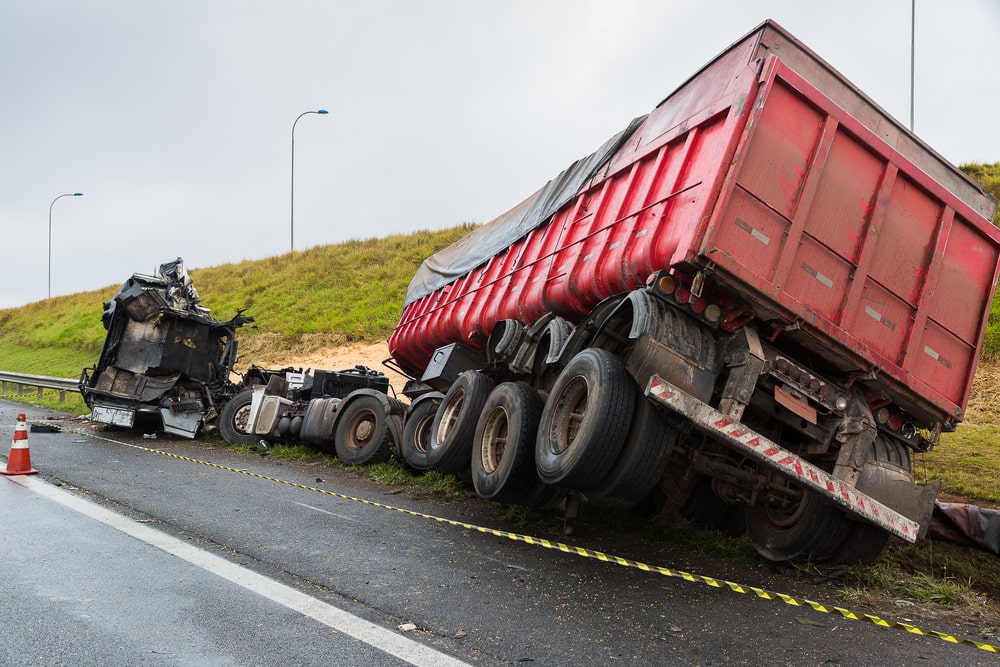
In an underride crash, a passenger vehicle slides beneath the rear of a trailer instead of stopping against it. The injuries can be catastrophic, and federal regulations address the problem with an equipment rule. Understanding that rule helps explain what to look for after a collision.
The Federal Rule Covers Most Trailers Built After 1998
Under 49 CFR 393.86, each trailer and semitrailer with a gross vehicle weight rating of 4,536 kilograms (10,000 pounds) or more, manufactured on or after January 26, 1998, must be equipped with a rear impact guard. The regulation lists several exemptions, so the first question in any crash is whether the trailer was required to have a guard at all.
The Guard Must Meet a Federal Standard
The regulation also sets performance requirements for the guard. It must meet Federal Motor Vehicle Safety Standard No. 223 as it stood when the trailer was manufactured, and a trailer with a guard installed must meet Standard No. 224 as in effect at that time. The guards are meant to keep a passenger vehicle from sliding underneath, so a bent, detached, or missing guard is the kind of defect that matters.
What to Ask About a Guard After a Crash
When a rear-end underride crash happens, a Colorado Springs truck accident lawyer starts with a list of questions about the equipment:
- Was the trailer required to have a guard, given its weight and manufacture date?
- Does the guard meet the standard in effect when the trailer was built?
- Was it damaged, bent, or missing before the collision?
- Who owned and maintained the trailer?
The last question matters because a trailer can belong to a different company than the tractor pulling it. Each owner may carry separate coverage, and commercial truck insurance in Colorado cases can involve several insurers and several potentially liable parties.
Colorado Springs Roads Raise the Stakes
According to Ganderton Law, Interstate 25 is the main north-south freight route through the city, and Powers Boulevard, Academy Boulevard, Woodmen Road, and US Highway 24 are other high-risk roads. Rear-end collisions, jackknife crashes, rollovers, underride crashes, and cargo shifts are all listed truck claim types, and a loaded truck can weigh about 80,000 pounds.
At those weights, an underride injury can be catastrophic, and the cost of long-term medical care can be the largest part of a claim. Families dealing with lasting harm of that kind may look to a catastrophic injury lawyer in Colorado Springs to value future care.
Head trauma is a risk when the roof line of a car meets the edge of a trailer, and it can lead a family to a traumatic brain injury lawyer as well, because symptoms may appear gradually and medical records from the first days carry weight. Brain injury claims also depend on follow-up care, so those records should be kept together.
Equipment Is One Part of the Picture
A missing guard may not be the only issue. Lighting, reflective tape, and brake condition can also factor into whether another driver could see the trailer at night. Driver fatigue under the federal hours-of-service limits, speed, and following distance may also be involved. Each factor raises its own questions about proof, the kind that come up in any big rig crash. The tractor and trailer also carry electronic data, and an early preservation letter protects it along with the trailer itself.
Keep the Trailer and the Guard Intact
The guard is physical evidence, and it can be repaired or scrapped quickly. A claim that begins with the trailer in its post-crash condition can be easier to prove than one that begins with a repaired part, so the inspection should happen before anyone changes it.
A fatal underride crash adds a family’s claim to the equipment questions, and a Colorado Springs wrongful death lawyer can explain how the trailer evidence supports that claim. That evidence is easiest to document before repairs begin.
The owner and the carrier control the trailer, so the injured person’s side has to act first. A written preservation request sent soon after the crash asks the owner to keep it as it is, and photographs of the guard from several angles help document its condition.
According to its website, Ganderton Law Personal Injury Law Firm works on a contingency fee basis, so no fee is owed unless it recovers money. That arrangement means an injured person can start an inspection request without paying upfront.
Questions Worth Asking Early
Underride cases can involve a trailer owner, a carrier, and a driver, and each may point at the others. Anyone hurt in a collision with a semitrailer can reach out to a Colorado Springs truck accident lawyer about preserving the trailer, so the inspection happens before the guard is changed.